Screen · 2026-08-19 · 4:23
The Last Meters of Dust Starship can cross millions of miles of vacuum. Return fuel cannot. Ice sits beyond 40°, the equator is where you want to land, and Arcadia is a thin overlap under meters of abrasive dust.
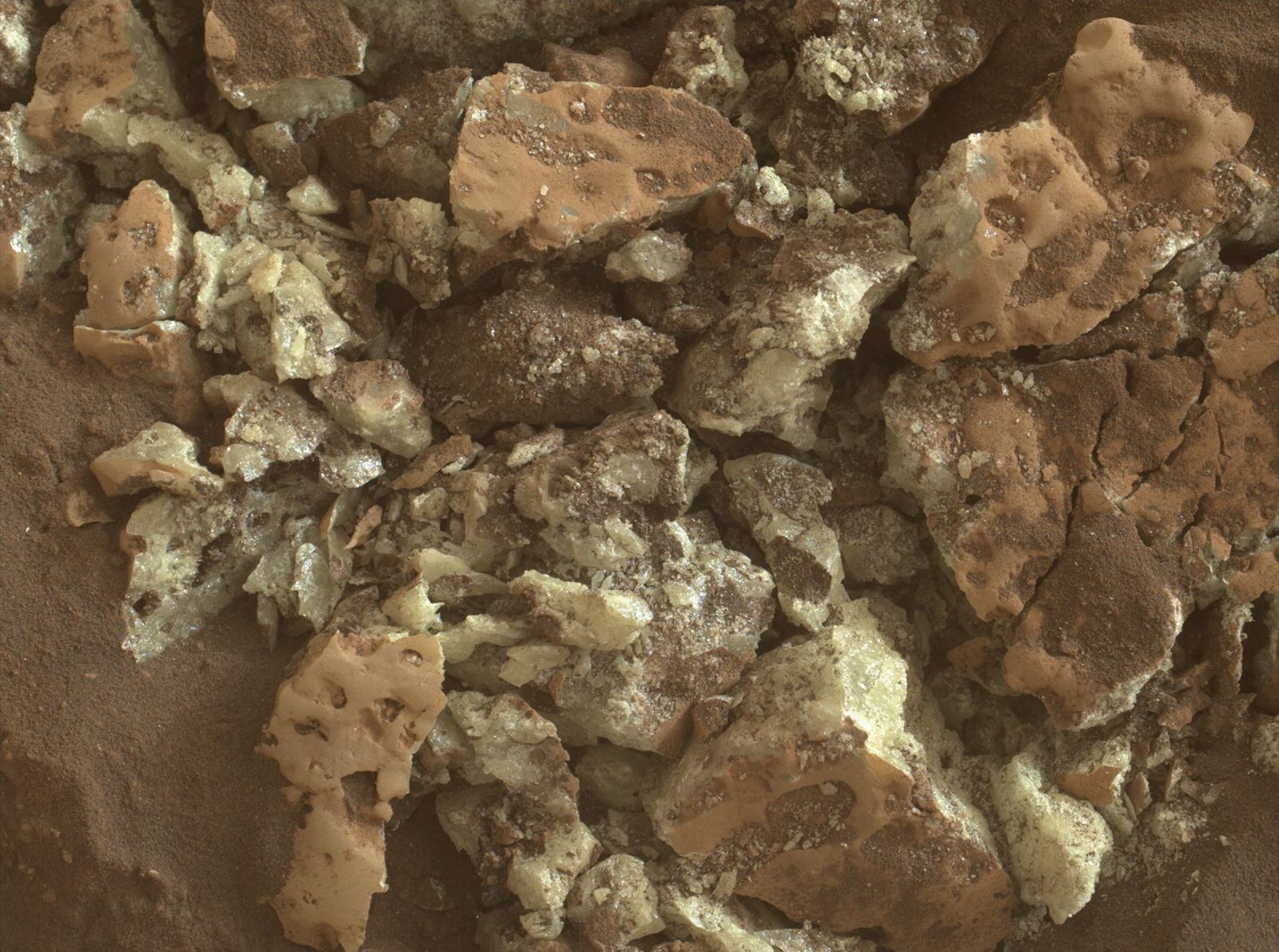
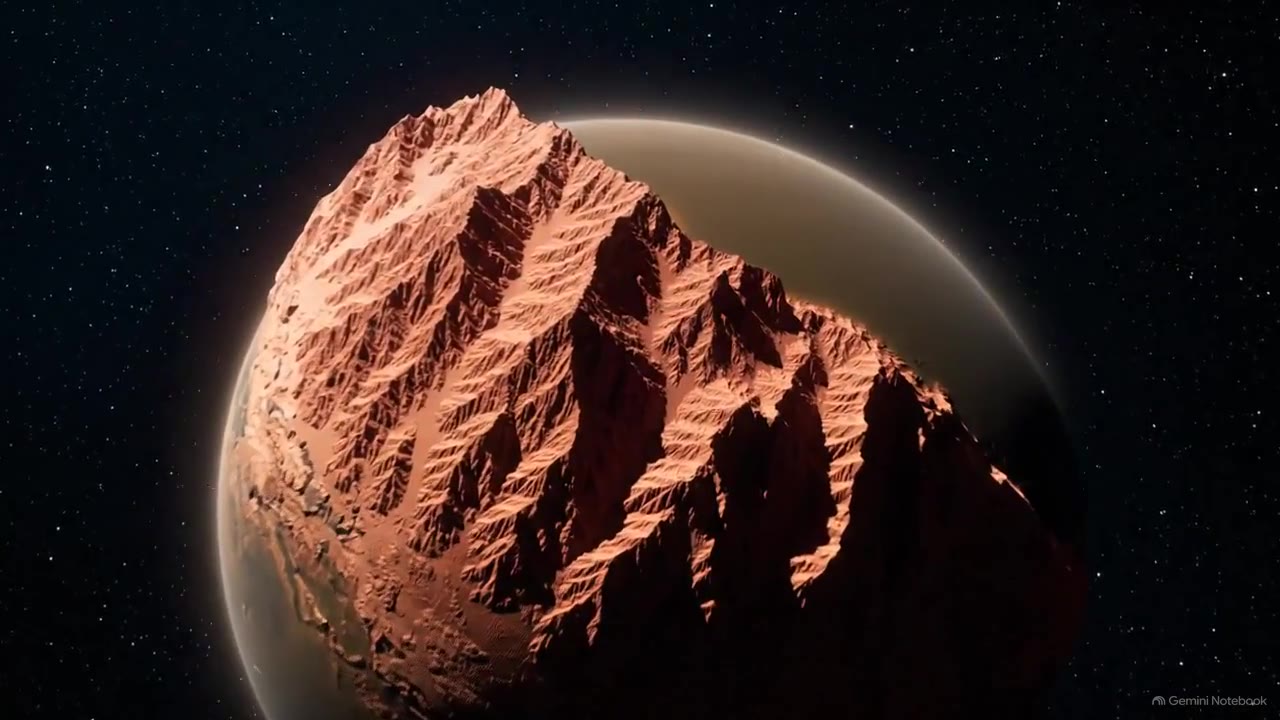
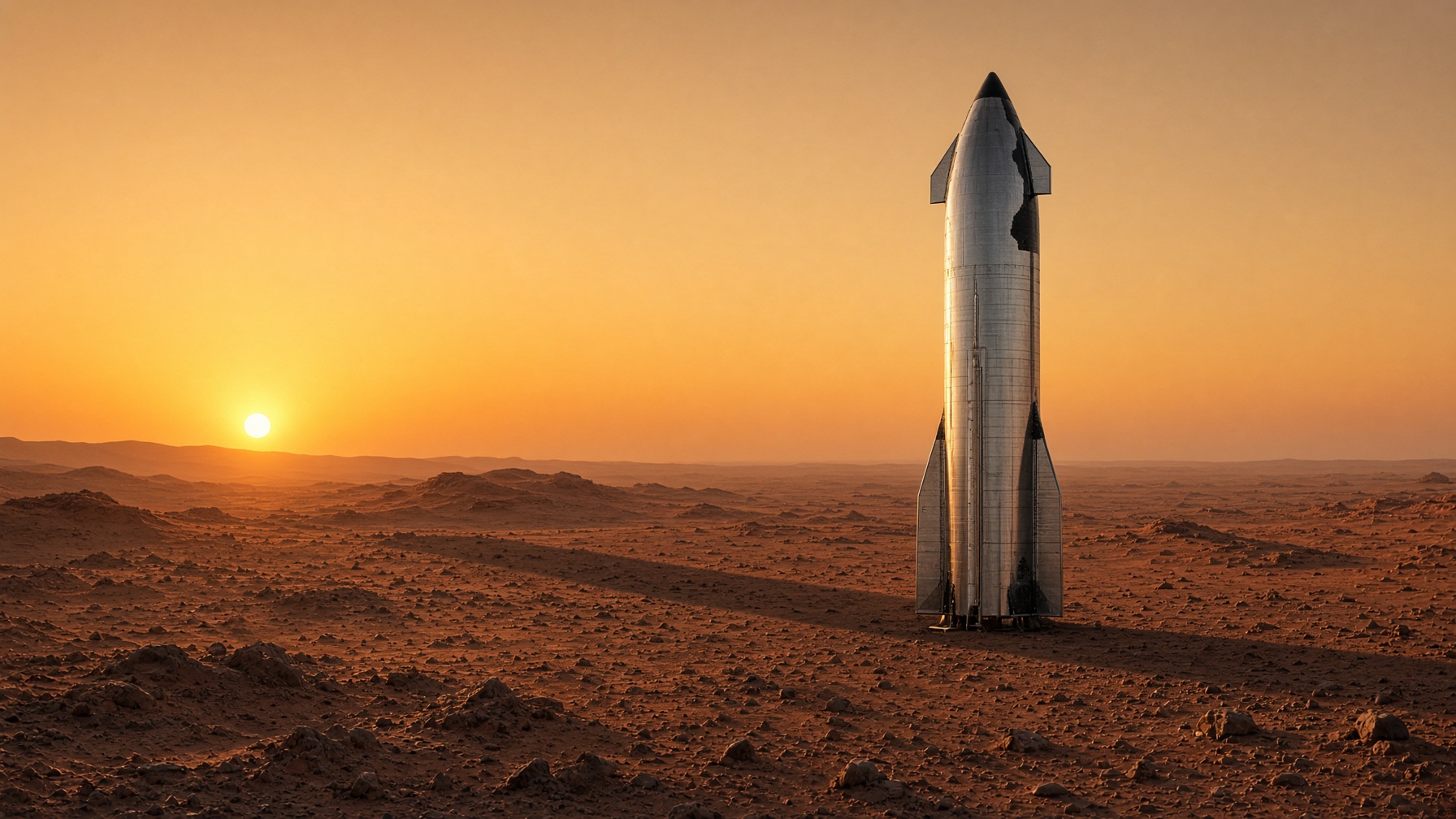
0:00 The mass limit 0:25 Chemists on the surface 0:50 A water-rich world 1:22 Ice versus the equator 2:27 Arcadia Planitia 3:02 The physics wall 3:53 The last meters of dust Transcript 0:00 SpaceX's Starship is the central pillar of a plan to transport millions of people to Mars, establishing a permanent human presence beyond Earth. 0:10 However, the laws of physics impose a strict mass limit on the journey: at more than two hundred tons dry weight, Starship cannot carry the propellant required for a return trip while still hauling a useful payload of passengers and supplies. 0:25 To solve this, the mission relies on in situ resource utilization: astronauts must become chemists on the Martian surface, splitting local water molecules and combining them with atmospheric carbon dioxide to synthesize liquid methane and oxygen propellant. 0:41 This makes the entire architecture dependent on a single requirement: the ability to find and extract water from the Martian crust. 0:50 On paper, Mars is a water-rich world. Orbiters have documented a water inventory equivalent to a frozen ocean covering forty percent of the surface. 0:58 The assumption has been that landing a spacecraft and scooping up this ice would be a straightforward engineering task. 1:05 But a 2024 feasibility study highlights a complication in the Starship architecture: the vehicle's massive weight means that extracting enough water to create return fuel would require mining infrastructure and nuclear power generation that are currently not in development. 1:22 The existence of that water matters little if the geographic reality of the planet prevents a spacecraft from safely accessing it. 1:30 To understand the challenge, we have to look at a global map of Mars and layer the specific requirements of a Starship mission. 1:40 First, the fuel. The subsurface water ice mapping project shows that the most accessible ice deposits are located toward the poles, specifically beyond 40° latitude, but landing a heavy spacecraft at these latitudes is dangerous. 1:54 The temperatures are too low for survival, the terrain is often rugged, and the solar radiation is too weak to provide industrial-scale power. 2:03 For safety and power, mission planners prefer the Martian equator, a region with flat terrain and maximum solar exposure. 2:11 This reveals a geographic mismatch. A wide empty zone separates the safe equatorial landing sites from the ice reserves required for the return flight. 2:20 Planners are forced into a narrow compromise, reducing the number of viable landing sites before the mission even leaves Earth. 2:27 This leads them to regions like Arcadia Planitia, located between twenty and thirty degrees latitude, where landing safety and ice presence barely overlap. 2:37 Even here, there is a catch. At these mid-latitudes, the ice has retreated underground. This image from the Phoenix lander shows white ice hidden beneath a mantle of dry red soil. 2:48 This creates a contradiction for the mission: you need to land the spacecraft on flat, solid rock to prevent it from tipping, but you must deploy your mining equipment on loose soil to reach the buried ice. 3:02 The difficulty SpaceX faces in these regions is measured in vertical depth rather than horizontal distance. 3:09 Industries often hit a cost wall where the laws of physics make further progress exponentially more expensive, similar to the way the semiconductor industry struggles to print smaller and smaller circuits. 3:22 Martian exploration hits its own cost wall the moment heavy robotics must strip away meters of abrasive, toxic Martian regolith. 3:31 Penetrating this surface at an industrial scale requires massive amounts of power, likely necessitating the use of nuclear surface reactors that don't yet exist. 3:42 Perfecting heat shields, orbital fuel transfers, and AI navigation are engineering triumphs, but they provide no help if the mission can't move the dirt under its feet. 3:53 This is the central paradox of the program: the most sophisticated flight architecture in history is completely dependent on brute force excavation. 4:03 We can navigate millions of miles of empty, frictionless vacuum, only to be stopped by the gritty reality of the landing site. 4:11 The ultimate bottleneck to becoming a multiplanetary species lies right here, within these last few meters of Martian dust. Support the research
This work is independent. If a film or a paper here was useful, send money on X — it funds the next one.
 2:38Watch here
 3:59Watch here
 7:27
7:27