Mars · Consciousness · Multiplanetary · First principles · 12 min read
The Imperative of Making Life Multiplanetary
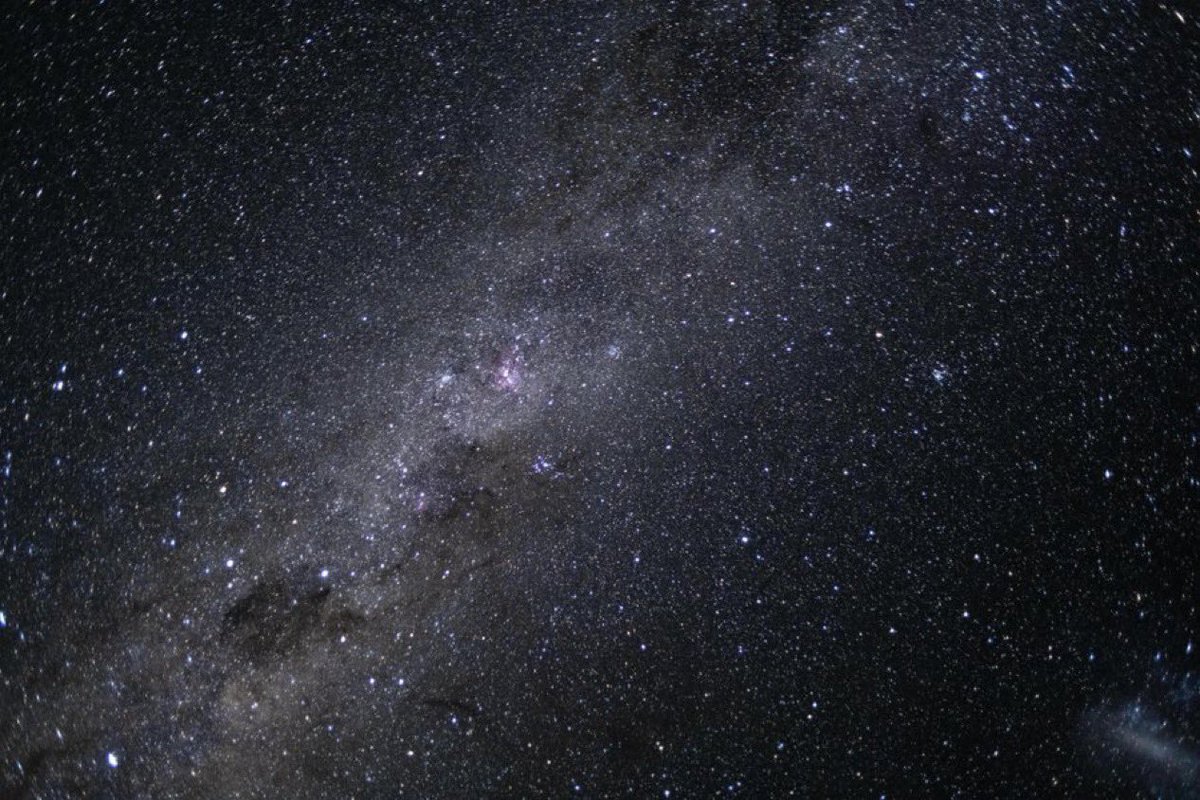
Preserving and extending the light of consciousness — a tiny candle in a vast darkness that could easily go out.
Humanity stands at a unique juncture in the history of life on Earth. For the first time in approximately 4.5 billion years, it has become technologically feasible to extend consciousness beyond a single planet. This capability carries profound implications for the continuity of civilization and the preservation of what Elon Musk has repeatedly described as the “light of consciousness.” The goal of becoming a multiplanetary species is not an exercise in escapism or speculative adventure; it constitutes a rational response to existential fragility, a means of dramatically extending the probable lifespan of civilization, and a necessary step toward deeper understanding of the universe itself.
The rarity and fragility of consciousness
Musk has consistently framed consciousness as both extraordinarily rare and precarious. In one widely referenced formulation, he stated: “Consciousness should be thought of as a tiny candle in a vast darkness that could easily go out. We should do anything possible to keep that flame alive.” He has elaborated on this image in interviews and public remarks: the image in his mind is “of a tiny candle in a vast darkness. A tiny candle of consciousness that could easily go out.” The purpose of SpaceX, he has explained, is to advance rocket technology so that life and consciousness can be extended beyond Earth to the Moon, to Mars, and eventually to other star systems, thereby ensuring that this light is not extinguished by a natural or man-made disaster confined to one planet.
This perspective draws on the apparent silence of the cosmos — the Fermi paradox. Despite the vast number of stars and the long timescales involved, no clear evidence of extraterrestrial technological civilizations has been detected. Musk has observed that humanity’s satellites have never needed to maneuver around an alien spacecraft. The most parsimonious inference, in his view, is that consciousness is rare, perhaps fleeting, and may exist only here. Under that assumption, the duty to protect and expand it becomes paramount.
Single-planet vulnerability and the Great Filter
A civilization confined to one planet remains subject to existential risks that history and astrophysics make unavoidable. The fossil record records multiple mass extinction events. An asteroid impact of the scale that ended the dinosaurs remains possible. Self-annihilation through advanced technology — nuclear conflict or other catastrophic misuse — cannot be dismissed. Over longer timescales, the Sun itself will expand, eventually rendering Earth uninhabitable.
Musk has articulated the binary choice clearly: “If you think about the future of humanity, it’s going to fundamentally bifurcate in two directions… Either it’s going to become multiplanetary, or it’s going to be confined to one planet, until some eventual extinction event.” He has further noted that becoming multiplanetary “would dramatically derisk civilizational extinction” and that “having two planets means that all our eggs are not in one basket. From there, we can extend to other star systems.”
This single-planet condition is often discussed in terms of a “Great Filter.” One plausible filter is the failure to expand beyond a home world before catastrophe intervenes. Musk has stated that if life becomes self-sustaining on Mars, humanity will have passed one of the greatest filters, positioning civilization for eventual interstellar expansion. Earth is roughly 4.5 billion years old, yet life remains non-multiplanetary; the window of opportunity may not remain open indefinitely.
Extending the probable lifespan of civilization
The multiplanetary objective is not primarily about individual human survival or personal escape. Musk has emphasized this distinction: “This is not about escaping to Mars. I will die probably long before Mars is a self-sustaining civilization. It’s just, I think, something we should do in order to have a much longer probable lifespan of civilization.” Technically, a multiplanet species increases the probable lifespan of civilization and of life as we know it. Humans do not live forever, yet civilization can endure far longer than any individual.
In a 2021 interview context and subsequent statements, he has described multiplanetary status as “life insurance for life itself — not just for humans, but for all the creatures on Earth.” Because other species cannot build spacecraft, humanity functions as the steward of life. Establishing a self-sustaining presence on Mars creates redundancy for the biosphere. The critical threshold is self-sustainability: if resupply from Earth ceases for any reason, the second planetary civilization must be capable of continuing and growing independently. Only then does the insurance policy become real.
Musk has also linked this to longer-term civilizational ambition: “Becoming multiplanetary will greatly increase the lifespan of our civilization and it is the critical next step to becoming multistellar.” From a multiplanet foundation, expansion to other star systems becomes conceivable, enabling exploration of the galaxy and potentially the discovery of the remnants of other one-planet civilizations that failed to pass the same filter.
Inspiration, curiosity, and the nature of the universe
Beyond risk mitigation lies a positive vision. A future confined permanently to Earth, never returning even to the Moon in a sustained way, is, in Musk’s words, “depressing.” By contrast, a spacefaring, multiplanet civilization offers an exciting and inspiring trajectory. He has argued that life cannot consist solely of solving successive problems; there must be goals that make one look forward to the future. Being a spacefaring civilization ranks among the most interesting possibilities available.
This ambition is ultimately epistemic. The goal of SpaceX, Musk has written, is “expansion of consciousness to the stars so that we may understand what questions to ask about the answer that is the Universe.” Curiosity about the nature of the cosmos — origins, the multiverse, the existence or absence of other life — motivates the effort. Expanding the scope and scale of consciousness improves the capacity to formulate the right questions. In this framing, multiplanetary expansion is both defensive and exploratory: it protects the flame while enabling its growth and illumination of greater darkness.
The present window and practical imperative
Musk has stressed temporal urgency. This is the first time in Earth’s history that the technological means exist. The window may close through civilizational stagnation, resource constraints, or unforeseen catastrophe. He has advocated allocating a modest fraction of collective effort — often cited as on the order of one percent — to establishing a self-sustaining city on Mars while the great majority of effort continues to improve conditions on Earth. The two are not mutually exclusive; progress on Earth and expansion beyond it reinforce each other.
Mars is the only realistic near-term destination for a self-sustaining second civilization. The technical requirements are substantial — fully reusable large-scale transportation, in-situ resource utilization, industrial base development — but they are within the bounds of physics. Success would mark a milestone comparable in significance, in Musk’s assessment, to life’s transition from ocean to land, or greater, because return to a prior state would no longer be possible.
Conclusion
The case for making life multiplanetary rests on a clear-eyed assessment of risk, a recognition of the rarity of consciousness, and an orientation toward long-term civilizational flourishing. It is not a rejection of Earth but an affirmation of responsibility toward life and consciousness wherever they may exist or be extended. As Musk has summarized the purpose of the endeavor: protect the light of consciousness. A single candle in vast darkness is precious precisely because it is fragile and, so far as we know, unique. Extending that light to other worlds, and eventually to the stars, is the most consequential project available to this generation. The alternative — remaining a single-planet civilization until an extinction event intervenes — is a future of unnecessary precarity. The path to a multiplanetary and ultimately multistellar future is difficult, yet it is the path that maximizes the probable continuity of consciousness itself.
Ask this paper
Grok answers from this essay only. Sign in so the call stays on your session — one question at a time.
Sign in to askNext
The First Breath