Starship · Materials · Reentry · 4 min read
Heat Shield First Principles
Ceramic tiles and 300-series stainless expand at completely different rates. Three mechanisms make the marriage survive 1,400–1,700 °C plasma.
The structural problem
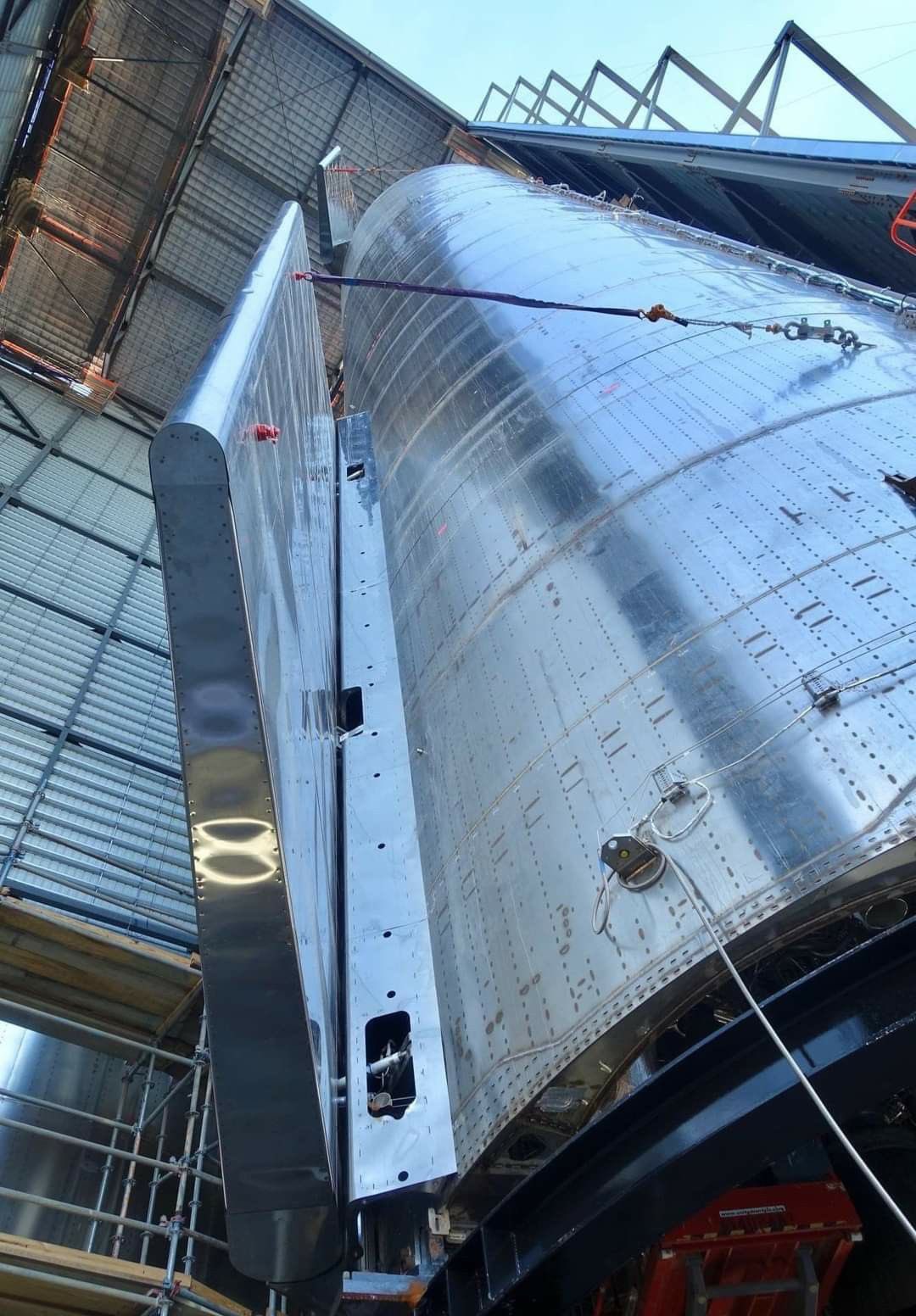
Starship’s heat shield solves one of the hardest structural problems in rocketry: ceramic tiles and 300-series stainless steel expand and contract at completely different rates. Glue-and-aluminum solutions fail that test. First principles does not.
Three mechanisms
Precision expansion gaps in a hexagonal tessellation — tight enough to block plasma, wide enough to prevent tile crush on reentry heating to 1,400–1,700 °C. Mechanical pinning over a flexible high-temperature blanket instead of rigid bonding, so tiles move independently without stress concentration. Hex geometry that eliminates straight-line plasma paths to the hull.
- Hex gaps: plasma-tight, crush-tolerant
- Pinned blanket: independent tile motion
- No straight-line plasma path to stainless
What the same logic implies for the Moon
The same first-principles approach that rejects glue-and-aluminum solutions also points toward a future HLS variant that can shed the entire heavy tile system for the lunar environment. No atmosphere, no plasma. Mass you do not need is mass you should not fly. Every weld, every panel, every fit-up on those stainless sections is a vehicle that must survive reentry, land, and fly again. No shortcuts.
Ask this paper
Grok answers from this essay only. Sign in so the call stays on your session — one question at a time.
Sign in to askNext
The First Breath